
How grooming is adapted for anxious and senior animals
This page walks through the specific adjustments made to pacing, environment, and handling for dogs and cats who don't do well with a rushed or standard grooming visit.
What makes a typical grooming visit stressful for some animals
A busy grooming shop often runs several dryers at once, holds multiple dogs in crates within sight and sound of each other, and moves through appointments on a tight schedule. None of that is unreasonable for an animal that handles it well. It can be genuinely difficult, though, for a dog with noise sensitivity, a cat unfamiliar with restraint, or an older animal whose joints ache after standing too long.
Xijano Putale limits how many animals are present in the studio at one time. Appointments are spaced further apart than a high-volume shop would schedule them, which reduces the number of unfamiliar animals and sounds a pet encounters during a single visit.
Reading the signals before they escalate
Groomers watch for early, subtle signs rather than waiting for an obvious reaction. Lip licking with no food nearby, a stiff or frozen posture, ears pinned flat, whale eye (where the white of the eye becomes visible), and a tightly tucked tail all indicate rising discomfort. In cats, a swishing tail, flattened ears, and dilated pupils tend to appear first.
When any of these signs show up, the session pauses. The animal gets a break, a change in position, or simply a moment of stillness before continuing. Sometimes that means an appointment runs longer than scheduled. That tradeoff is treated as normal rather than as something to avoid.
Adjustments made specifically for older animals
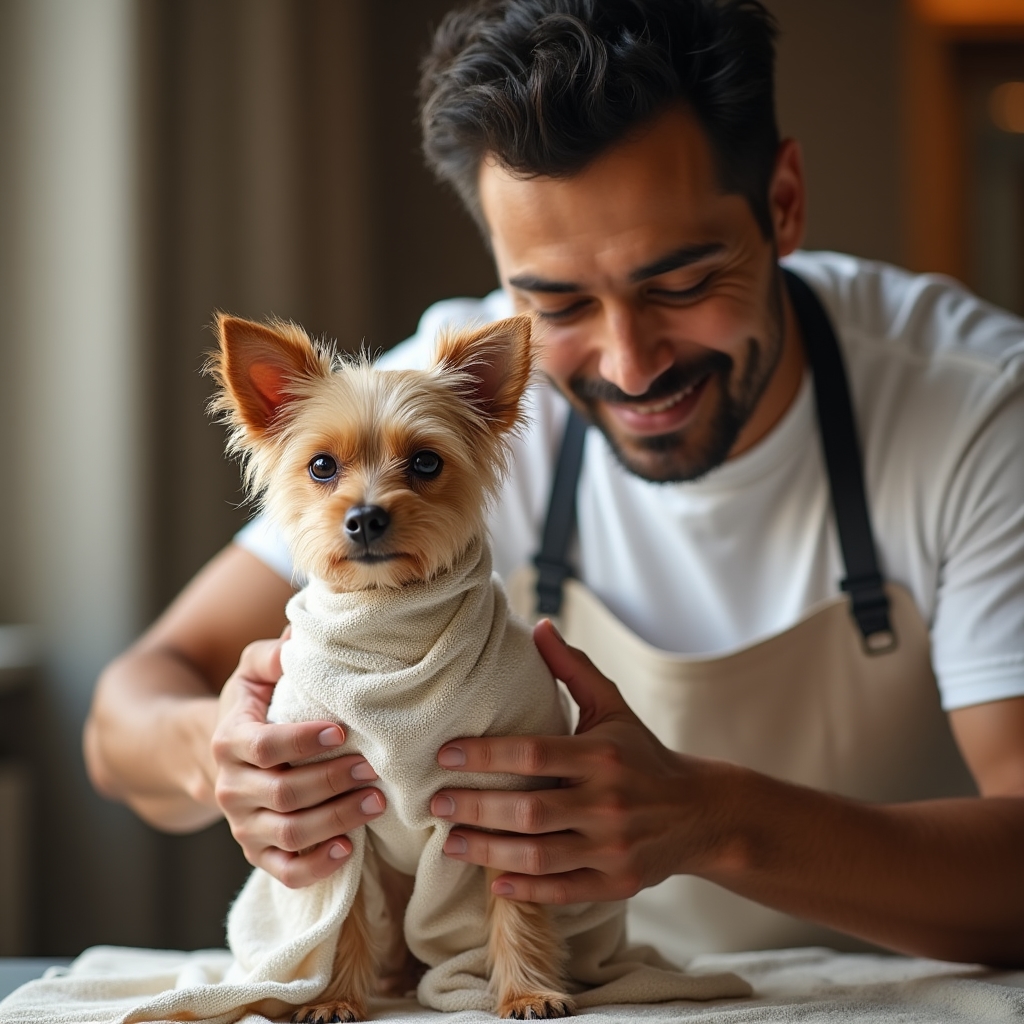
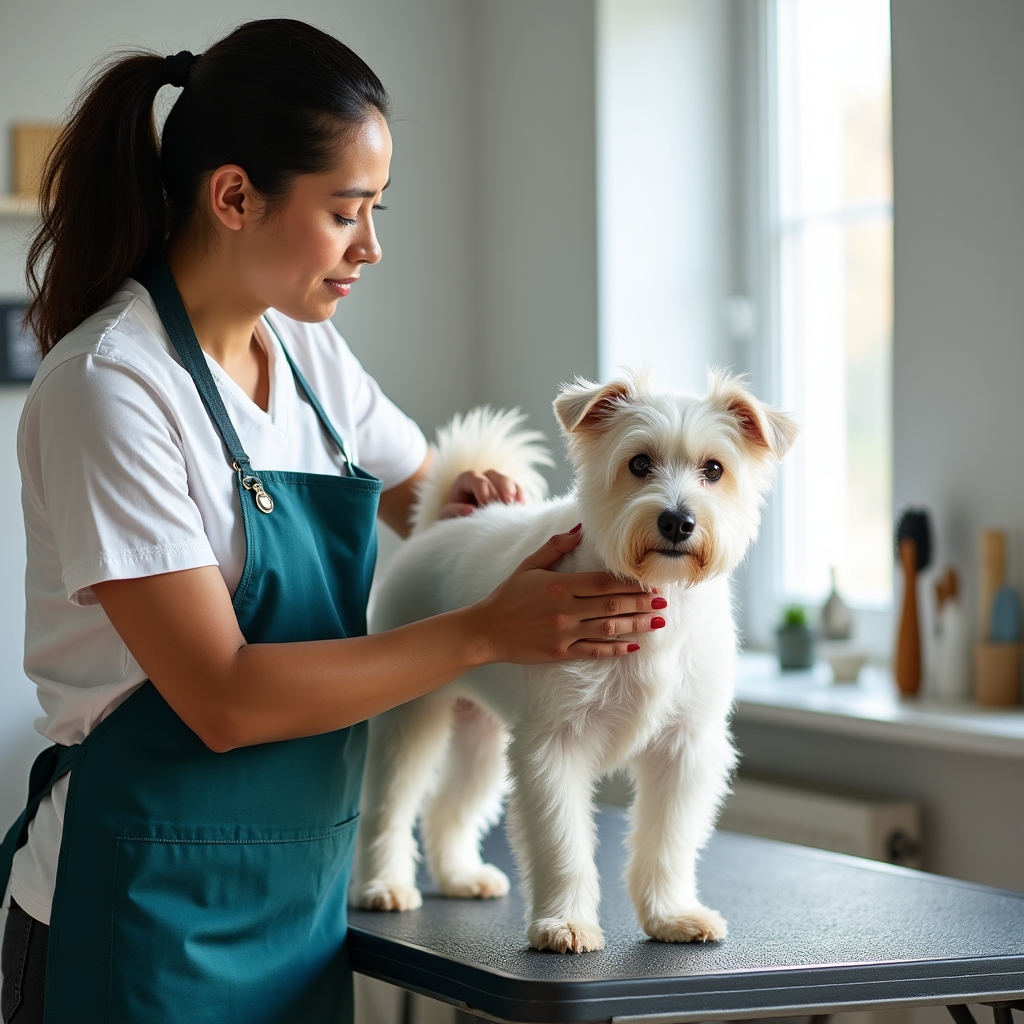
Senior dogs and cats are handled differently from the moment they enter the studio. Standing periods are kept short, with padded, non-slip surfaces used throughout bathing and drying. Water temperature is checked more carefully, since older skin can be more sensitive to heat and cold alike.
Reduced hearing or vision changes how an animal startles, so groomers approach from within an animal's field of view when possible and avoid sudden movement near the head. Positioning during trims accounts for arthritis or limited range of motion rather than expecting a senior animal to hold a young dog's posture.
A studio designed to lower sensory load
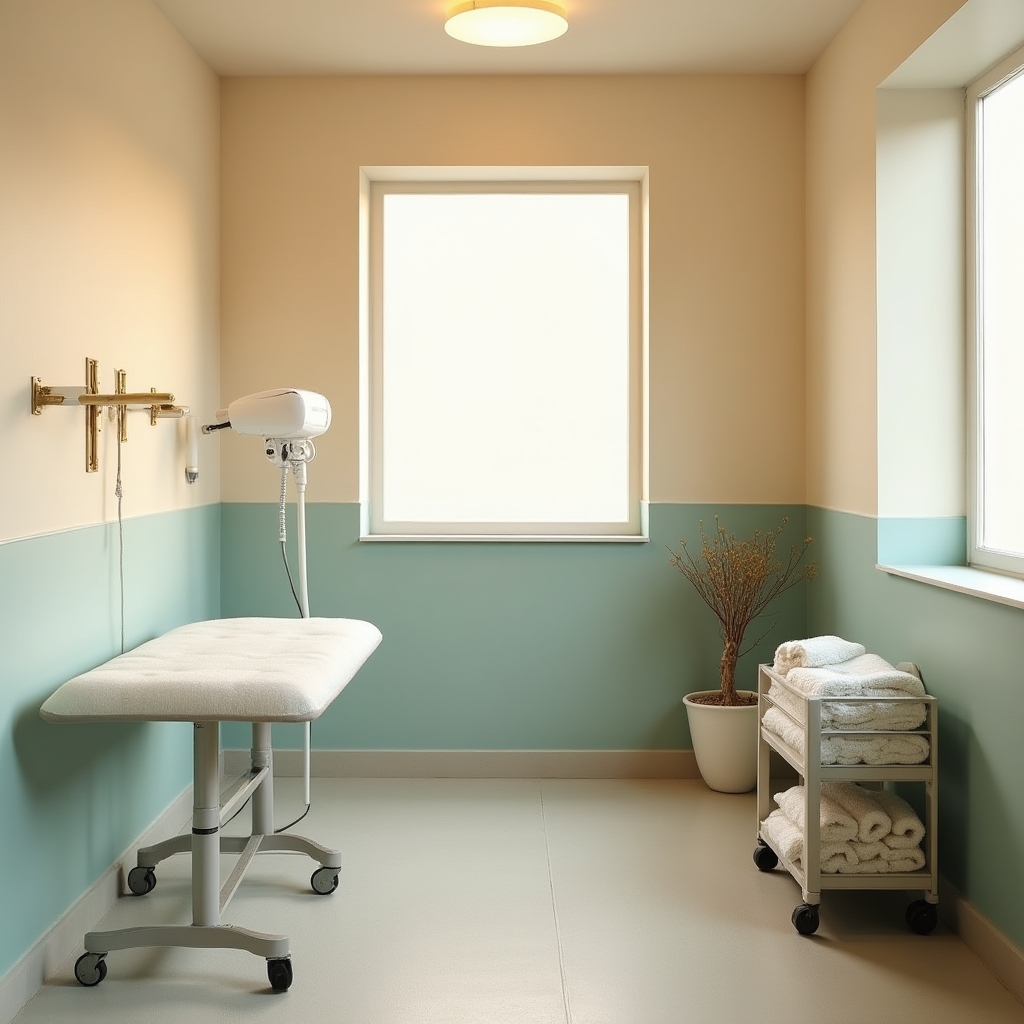
The physical space matters as much as technique. Dogs and cats wait in separate areas rather than sharing a single space, which reduces predatory or prey-related tension between species. Lighting is kept soft rather than harsh and fluorescent. Equipment is chosen for lower decibel output, and only one dryer runs at a time.
What to expect before your pet's first appointment
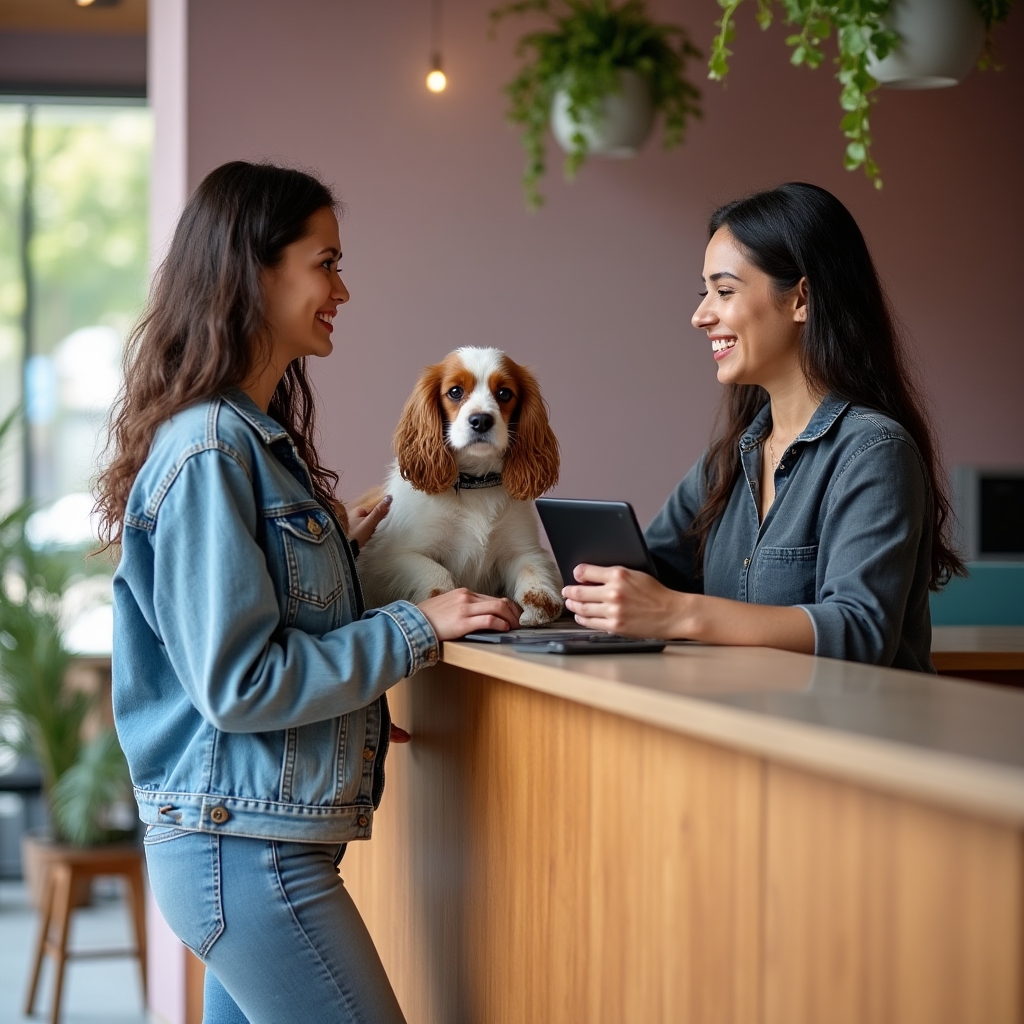
New clients begin with a phone or in-person consultation covering temperament, prior grooming history, and any medical notes your veterinarian has shared with you. Bringing a familiar blanket or toy can help some animals settle more quickly in an unfamiliar room.
For pets with significant anxiety, a first visit sometimes involves only a short introduction to the space, with the actual groom scheduled for a later appointment. This is a grooming-pacing decision, not medical guidance. Any concerns about sedation, anxiety medication, or underlying health conditions should be directed to your veterinarian, since grooming staff are not licensed to provide veterinary advice.
Curious whether this approach fits your pet?
Describe your dog or cat's temperament and we'll talk through what a first visit could look like.
Contact the Studio